

Ceramic Ball
Why Choose Us?
Rich Experience
PM has been established for more than 20 years, is a leading manufacturer specializing in tower packing we have been focusing on building an one-stop chemical packing E-commerce platform, aiming at satisfying customers comprehensive chemical packing demand and providing fast full service.
Global Sales Network
The products are exported to the North America, South America, Europe, Southeast Asia/ Mideast, Africa, East Asia (Japan/ South Korea). more than 120 countries.
Quality Service
We not only promote qualified product, also emphasize on providing professional technique and good service. Providing fast and convenient delivery of goods for customers is our constant pursuit. In order to meet customers need for products & services anytime and anywhere, we have established a strong service system.
Advanced Equipment
75 Meters full automatic production line, Packaging Machine, Sintering Furnace,Forming Machine,Vacuum Extraction Machine,Mixing and Stir Powder Tower, Carbon Dioxide Tester,Resistance Furnace, Drying Cabinet,Digital Display Comprehensive Testing Instrument for Strength of Engineering Ceramics, Particle Abrasion Tester, Moisture Tester, Particle Strength Tester, Digital Viscometer,Electrical Scale.
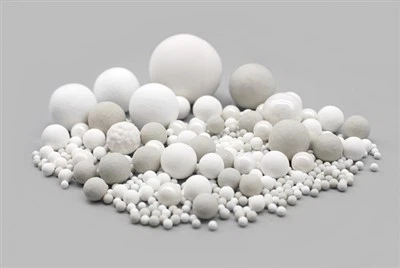
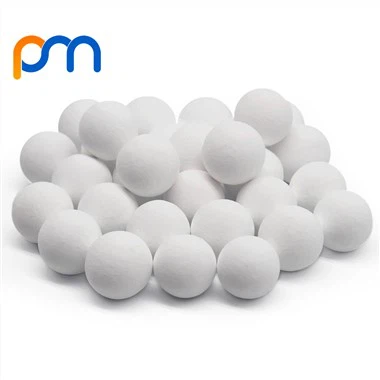
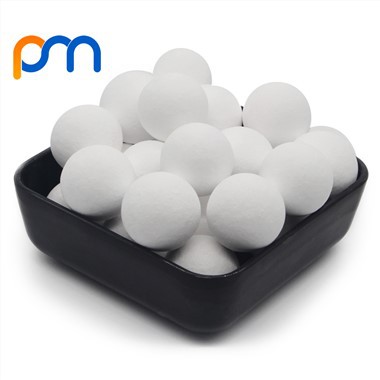
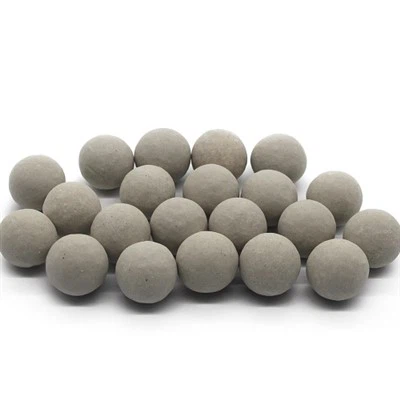
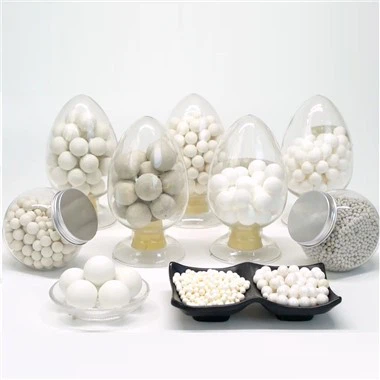
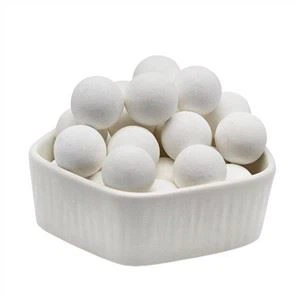
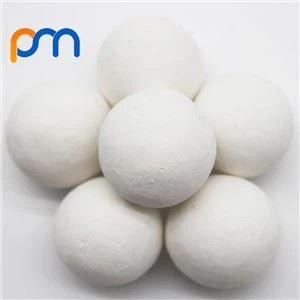
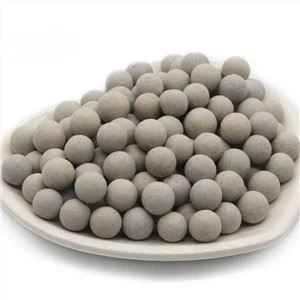
Ceramic ball/media are inert with stable properties and a low rate of water adsorption. They are normally used to support adsorbents and catalysts within reactor vessels or support grid perforations but can also be utilized as grinding media.




High adsorption capacity
Ceramic balls possess a large surface area and a defined porous structure, maximizing their adsorption capacity. This allows for the effective removal of impurities, contaminants, and unwanted substances from liquids or gases.
Excellent chemical stability
Ceramic ball are designed to withstand harsh operating conditions and exhibit exceptional chemical stability whether you require adsorption in corrosive environments or high temperatures.
Uniform particle size distribution
Ceramic balls have the capability for optimum flow characteristics and minimal pressure drop. This uniformity enables efficient fluid distribution, prevents channeling, and promotes homogeneous adsorption, maximizing the efficiency of your processes.
Versatile applications
Ceramic ball are widely used across multiple industries, offering a versatile solution for various adsorption requirements. Whether you need to purify water, eliminate contaminants from gases, or separate impurities from chemicals.
Cost-effective
Adsorption chemicals is committed to sustainability and cost-effectiveness. Our ceramic balls are long-lasting performance, reducing the need for frequent replacement.
The Function of Ceramic Ball
Porcelain balls are widely used in petroleum, chemical, fertilizer, natural gas and environmental protection industries, as the covering support material and tower packing for the catalyst in the reactor. It has the resistance of high temperature and pressure with low water absorption, and stable chemical properties. It can withstand the corrosion of acids, alkalis and other organic solvents as well as temperature changes during the production process. The main function of ceramic ball is to increase the gas or liquid distribution connection, support and cover the active catalyst. Classification of Porcelain Balls: Porcelain balls are classified according to their use, and can be divided into support ceramic balls and grinding ceramic balls.
The support ceramic balls are also known as inert alumina ceramic balls. The support ceramic balls are widely used in petroleum, chemical, fertilizer, natural gas and environmental protection industries. They are used as the covering support material for the catalyst in the reactor and the tower packing. The inert ceramic balls are divided into: 17%-19% inert ceramic ball, 23%-26% inert ceramic ball, 68% 75% alumina ceramic ball, 92% high alumina ceramic ball, 99 high alumina ceramic ball, concave-convex grooved open-pored ceramic ball, active ceramic ball, open-pored ceramic ball, microporous ceramic ball, storage Hot porcelain ball.
Grinding ceramic balls are grinding bodies used in fine grinding equipment such as ball mills, pot mills, and vibration mills. Grinding ceramic balls have the advantages of high hardness, high bulk density, corrosion resistance, etc., and their crushing efficiency and wear resistance are much better than ordinary balls or natural pebbles. They are widely used in ceramics, glass, enamel, pigments, chemical industries and other industries. According to the content of Al2O3, the grinding balls are divided into 92% 75% 68% alumina grinding ball.
Ceramic Ball Applications
Ceramic ball is widely used in petroleum, chemical fertilizer, natural gas, and environmental protection industries.
Catalysis: Ceramic balls are widely used as catalyst support materials in various chemical processes, including petrochemical, refining, and environmental applications.
Absorption: They find application in absorption towers and columns for the removal of impurities, gases, and odors from liquids or gases in industries such as water treatment and gas purification.
Thermal Storage: These ceramic balls are employed in thermal storage systems, such as solar energy storage and high-temperature heat storage.
Inert Packing: Ceramic balls serve as inert packing material in columns and reactors to create uniform flow distribution and support catalytic or adsorption processes.
- High mechanical strength (Monolithic spheres will not split, crack or spall in use).
- High temperature resistance.
- Lower water absorption.
- Quite excellent chemical stability.
- Can resist corrosion of acid, alkali and other organic solvent.
- Excellent thermal shock resistance (can withstand the temperature urgent changes occurred in production process).
- Trouble-free reactor filling due to high crush strength.
- Will not plug catalyst bed, optimizing the process efficiency by keeping the pressure drop low and catalyst activity high.
- No contaminate catalyst due to maximize resistance to attrition, extending the catalyst Activity life and reduce the operation cost.

Ceramic balls and heat storage balls are two common spherical fillers. Their main function is to increase the surface area of the packed tower or reactor, thereby improving mass transfer and reaction efficiency. However, there are certain differences in structure and function between these two kinds of spherical fillers. Ceramic balls mainly play the role of increasing the height of the tower, reducing the size of the droplets, and increasing the surface area of the droplets, thereby improving mass transfer efficiency and reaction efficiency. In contrast, thermal storage balls are mainly solid ceramic balls with good thermal and chemical stability.
The surface area of the heat storage ball is relatively small, but it has good heat storage performance. In some reactions, heat storage balls can absorb heat during the reaction and alleviate fluctuations in reaction temperature, thereby improving the stability and selectivity of the reaction. Therefore, ceramic balls and heat storage balls have different characteristics and advantages during application.
According to the characteristics and requirements of the reaction, selecting appropriate ceramic balls or heat storage balls can better improve reaction efficiency and stability. In the chemical industry, both ceramic balls and heat storage balls are very important materials.
Ceramic Ball Specifications
| Product Name | Ordinary | 23-30% Al2O3 Porcelain Ball | Medium Al2O3 Content Porcelain Ball | High Al2O3 Content Porcelain Ball | 99% Al2O3 Porcelain Ball |
| Porcelain Ball | |||||
| Al2O3+SiO2(%) | >93 | >92 | >93 | >94 | >99 |
| Al2O3(%) | 17-23 | 23-30 | 40-75% | 85-97 | 99 |
| Fe2O3(%) | <1 | <1 | <1 | <1 | 0.2 |
| CaO(%) | <0.5 | <1.5 | <1.5 | <0.5 | 0.2 |
| MgO(%) | <0.5 | <1.5 | <0.5 | <0.5 | 0.1 |
| K2O+Na2O(%) | <4 | <4 | <3.5 | <4 | >0.5 |
| TiO2 | <0.5 | <0.5 | <0.1 | <0.1 | 0.5 |
| Free Leachable Fe2O3 | <0.1 | <0.1 | <0.005 | <0.001 | - |
| Water Absorption | <0.5% | <0.5% | <1 | <2 | 2月5日 |
| Particle Density (g/cm3) | 2.3-2.4 | 2.3-2.4 | 2.6-2.9 | 3.4 | 3.2-3.6 |
| Operating Temperature | 980 | 980 | 1450 | 1580 | 1580 |
| (max) ℃ | |||||
| Moh's Hardness | >6.5 | >7 | >7 | >7.5 | >7.5 |
| Compressive Strength (KN/Particle) | |||||
| Φ6mm | >0.5 | >0.5 | >0.50 | >0.6 | >1 |
| Φ25mm | >6.5 | >6.5 | >4.9 | >55 | >8 |
| Φ38mm | >8.9 | >8.9 | >5.5 | >54 | >8 |
| Φ50mm | >9 | >9.8 | >6.5 | >7.8 | >15 |
Typical Quality Assurance of Ceramic Balls
To analyze the raw material for chemical composition, particle size and moisture content to ensure consistent properties that will provide optimum performance of the finished product.
Following crumbling and pulverization of the raw material it is screened to remove coarser particles.
After the ground raw material is pre-selected by magnetic separation it is checked to make sure that the fe2o3 content is less than 1%. After aging and soaking, the water content is checked to ensure it is between 20-24%.
After moulding shapes the product, extruding or hand rolling, a random check is made on dimensions and shapes.
After the product is dried, a random check to make sure that the moisture content is less than 3%.
During firing the furnace is precisely controlled with regard to temperature and duration of firing.
Every finished item is visually examined to confirm shape, color and dimensions are within specification.
Random tests are carried out to confirm acceptable chemical and physical properties of the finished product. This includes testing for specific gravity, compressibility strength, water absorption, anti-acid strength, etc.
Prior to packing the finished product for dispatch the weight of a unit volume is checked to comply with the specification limits.
The finished product is certified to comply with the customers specification.
The Forming Techniques of Ceramic Balls
Currently large-scale industrial production of ceramic grinding media mainly form/shape techniques including rolling, isostatic pressing (cold isostatic pressing and dry isostatic pressing).
The rolling shape is a semi-dry and wet forming method. It is formed by sticking dry powder on the outside of "wet core" continuously. Usually this shape ball diameter is small and the normal diameter from D0.5mm~30mm.
Cold isostatic pressing with wet bags forming alumina ceramic ball is to powder for spherical cavity filling, soft mode (rubber mold), soft mode must be sealed, in cold isostatic pressing machine working inside the cylinder (pressure vessel), ventilation with ultrahigh pressure (generally in more than one 100mpa) liquid medium, liquid medium to each equal to the pressure will be soft mode along with powder uniform compression, after waiting for unloading the soft mode along with its internal body from the cold isostatic pressing machine work out of the cylinder (rubber mold is wet, and the film is also known as bags, wet bags hence the name), outside the working cylinder mold release or spherical body. The alumina ceramic body formed by this method has high density and uniformity. The diameter usually from D20~D60mm.
Dry isostatic forming of ceramic grinding media is easy to achieve automatic production and is less affected by human factors. The consistency of the shape and appearance of the green body is better than that of the wet bag cold isostatic forming. In general, from the beginning to the end of the unloading pressure a pressing cycle within a minute, when unloading blank internal gas discharge in a short time, if the moisture of the powder uneven or granulation particle size not appropriate, body are easy to crack. So by this method forming of powder forming high performance requirements, must be approved by the powder spray granulation. The ceramic grinding media quality is very well once the raw material and producing process control well.
Our Factory
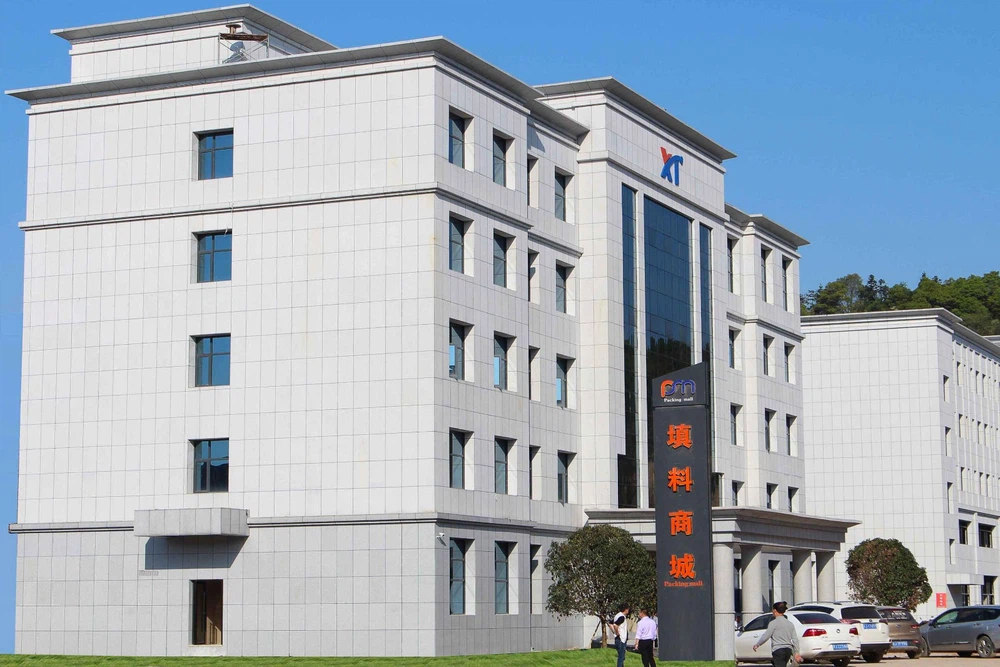
Super Packing Mall is a leading manufacturer specializing in tower packing. Our tower packing is well accepted by overseas customers. It includes metal, ceramic, plastic random packing, structured packing, ceramic ball, water treatment material, adsorbent etc.
Our Product are used for industries like chemical industry, chemical fertilizer industry, oil refining, petrochemical industry and natural gas, fine chemical, flavors factory, air pollution control, isomer separation, the separation of thermally sensitive materials etc.