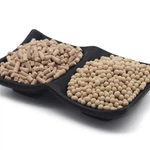


Catalyst
Why Choose Us?
Rich Experience
PM has been established for more than 20 years, is a leading manufacturer specializing in tower packing we have been focusing on building an one-stop chemical packing E-commerce platform, aiming at satisfying customers comprehensive chemical packing demand and providing fast full service.
Global Sales Network
The products are exported to the North America, South America, Europe, Southeast Asia/ Mideast, Africa, East Asia (Japan/ South Korea). more than 120 countries.
Quality Service
We not only promote qualified product, also emphasize on providing professional technique and good service. Providing fast and convenient delivery of goods for customers is our constant pursuit. In order to meet customers need for products & services anytime and anywhere, we have established a strong service system.
Advanced Equipment
75 Meters full automatic production line, Packaging Machine, Sintering Furnace,Forming Machine,Vacuum Extraction Machine,Mixing and Stir Powder Tower, Carbon Dioxide Tester,Resistance Furnace, Drying Cabinet,Digital Display Comprehensive Testing Instrument for Strength of Engineering Ceramics, Particle Abrasion Tester, Moisture Tester, Particle Strength Tester, Digital Viscometer,Electrical Scale.
A catalyst is a substance that speeds up a chemical reaction, or lowers the temperature or pressure needed to start one, without itself being consumed during the reaction. Catalysis is the process of adding a catalyst to facilitate a reaction.
During a chemical reaction, the bonds between the atoms in molecules are broken, rearranged, and rebuilt, recombining the atoms into new molecules. Catalysts make this process more efficient by lowering the activation energy, which is the energy barrier that must be surmounted for a chemical reaction to occur. As a result, catalysts make it easier for atoms to break and form chemical bonds to produce new combinations and new substances.
Using catalysts leads to faster, more energy-efficient chemical reactions. Catalysts also have a key property called selectivity, by which they can direct a reaction to increase the amount of desired product and reduce the amount of unwanted byproducts.


Using catalysts offers several advantages in chemical reactions:
Increased Reaction Rate
Catalysts can speed up chemical reactions by lowering the activation energy required for the reaction to occur. This means that reactions can happen at a faster rate with the presence of a catalyst.
Improved Efficiency
By accelerating reactions, catalysts can make industrial processes more efficient, reducing the amount of energy and resources required to produce a given amount of product.
Selective Reactions
Catalysts can promote specific reactions while leaving other components of a mixture unaffected, allowing for more precise control over the desired chemical transformations.
Environmental Benefits
In many cases, the use of catalysts can reduce the formation of unwanted by-products and pollutants, leading to greener and more sustainable chemical processes.
Cost Savings
By increasing reaction rates and efficiency, catalysts can lead to cost savings in industrial processes by reducing the time and resources needed for production.
How Does a Catalyst Work
During a chemical reaction, molecules break chemical bonds between atoms. New bonds are also formed with different atoms. For any chemical reaction to occur, a certain activation energy is needed.
The higher the required energy, the longer it will take for a reaction to complete from start to finish.
But when you introduce a catalyst, you can speed up the reaction, breaking and rebuilding atoms and structures by lowering the required activation energy.
This is the key to understanding catalysis. Catalysts help molecules break chemical bonds between atoms and form new bonds with different atoms much quicker than without the use of a catalyst.
A catalyst plays a vital role in many industries such as the pharma and environmental fields. Their ability to enhance the efficiency, selectivity, and economy of chemical processes makes them suitable for various real life applications. Some of the real life applications of catalysts are mentioned below:
Environmental cleaning: Catalysts are used in environmental cleaning processes to degrade pollutants and contaminants in air and water. There, catalysts bring about the change in the harmful pollutants that are transformed into 'less toxic' by-products.
Petrochemical industry: Catalysts are essential in petroleum refining processes to convert crude oil into valuable products such as gasoline, diesels etc. Refinery catalysts include zeolites, platinum, and nickel catalysts used in hydrocracking, hydrotreating, reforming, and isomerization reactions to improve fuel quality, increase yields, and meet product specifications.
Pharmaceutical synthesis: In pharmaceutical synthesis, catalysts play an important role in enabling efficient and selective chemical transformations to produce pharmaceutical compounds. Catalysts help optimize reaction conditions, increase reaction rates, and improve product yields, contributing to the development of safe and effective drugs
Food production: In food production, catalysts are utilized in various processes to improve efficiency, enhance quality, and reduce production costs. They quicken reactions during food processing when used which bring out the flavour, texture, and also enhance the nutritional value.
Renewable energy resources: Catalysts enable the conversion of renewable energy resources like biodiesel and hydrogen fuel cells to be produced. They accelerate the conversion of biomass to biofuels by producing numerous types of clean energy.

Types of Catalysts
Homogeneous catalyst: In homogeneous catalysis, reaction mixture and catalyst both are present in the same phase. Both catalyst and reactants show high homogeneity which results in high interaction between them that leads to high reactivity and selectivity of the reaction under mild reaction conditions. Some examples of homogeneous catalysts are brønsted and Lewis acids, transition metals, organometallic complexes, organocatalyst. Some notable chemical processes that occur through homogeneous catalysis are carbonylation, oxidation, hydrocyanation, metathesis, and hydrogenation.
Heterogeneous catalyst: In heterogeneous catalysis, catalysts exist in a different phase than the reaction mixture. Some of the exemplary processes that use heterogeneous catalysts are Haber-Bosch process for the synthesis of ammonia, Fischer–Tropsch process to produce a variety of hydrocarbons. Heterogeneous catalysts dominate major industrial processes because of the easy separation of product and recovery of catalyst. Heterogeneous catalysts may be used as fine particles, powders, granules. These catalysts may be deposited on the solid support (supported catalysts), or used in bulk form (unsupported catalysts).
Heterogenized homogeneous catalysts: Heterogeneous catalysts in contrast to their homogeneous counterparts are much more difficult to develop practically. One reason is their complexity, which precludes their analysis at a molecular level and development through structure–reactivity relationships. Traditional heterogeneous catalysts (metal oxides or supported metals) exhibit less selectivity and reactivity. In order to surmount these issues, the homogeneous catalyst is grafted onto the solid supports to prepare their heterogenic analogs. Presently, the solid-supported homogeneous catalysts are widely recognized and well exploited in academic and industrial research. The aim of this approach is to overlap the positive features of both homogeneous (selectivity and reactivity) and heterogeneous catalyst (reproducibility) and this can be achieved through the immobilization of catalysts such as metal complexes, organometallic compounds on the solid surface either through physisorption or chemisorption.
Biocatalysts: Natural proteins (enzymes) or nucleic acids (RNA or ribozymes and DNAs) used to catalyze specific chemical reactions outside the living cells is called biocatalysis. Enzymes are obtained from animal tissues, plants and microbes (yeast, bacteria or fungi). High selectivity, high efficiency, eco-friendliness and mild reaction conditions are the driving forces for their large scale utilization and making biocatalysts an alternative to conventional industrial catalysts. Significant progress in the field of protein engineering and molecular evolution has revolutionized the world of biocatalysis for the industrial scale syntheses of fine chemicals, active ingredients (APIs) biofuels (e.g. lipase for the production of biodiesel from vegetable oil), dairy industry (e.g. protease, lipase for lactose removal, renin for cheese preparation), baking industry (e.g. amylase for bread softness and volume, glucose oxidase for dough strengthening), detergent manufacturing (e.g. proteinase, lipase, amylase used to remove stains of proteins, fats, starch, respectively) leather industry (e.g. protease for unhairing and bating), paper industry, textile industry (e.g. amylase for removing starch from woven fabrics). Immobilization of enzymes on solid supports turns enzymes into heterogeneous solid catalyst which enhances the activity, stability and increase the
Mechanism of Catalysis

In the presence of a catalyst, less free energy is required to reach the transition state, but the total free energy from reactants to products does not change. A catalyst may participate in multiple chemical transformations. The effect of a catalyst may vary due to the presence of other substances known as inhibitors (which reduce the catalytic activity) or promoters (which increase the activity and also affect the temperature of the reaction).
Catalyzed reactions have a lower activation energy (rate-limiting free energy of activation) than the corresponding uncatalyzed reaction, resulting in a higher reaction rate at the same temperature and for the same reactant concentration. As in the case of any other chemical reaction, the reaction rate depends upon the frequency of contact of the reactants in the rate-determining step.
The catalyst participates in this slowest step. The rate of the reaction depends upon the amount of catalyst.Although catalysts are not consumed by the reaction itself, they may be inhibited, deactivated, or destroyed by secondary processes.
Manufacturing of Catalysts
Catalyst manufacturing involves several process steps such as preparation and mixing of solutions or suspensions, crystallization, filtration, washing, mixing and kneading of powders, shaping drying, impregnation and calcination.
Before any of the preparation process starts, an active metal phase and a support need to be carefully chosen. The active metal component must be well-dispersed in order to have a large surface area when contacted with a support. On the other hand, the support has to be made of a porous and heat-resisting material.
Impregnation
During this process, a solution containing active metal components (i.e. precursors) is added to the porous catalyst supports. Capillary action draws the solution into the pores and metal precursors are adsorbed onto the high surface area support. This is the first time that the metal precursor contacts the solid supports. If the volume of the solution is less than the pore volume of the support, the process is also known as incipient wetness impregnation or dry impregnation. Dry impregnation is commonly conducted in a rotating vessel, while the metal solution is sprayed on the support particle.
Drying
Materials go through the process of drying after impregnation to eliminate solvents from the support. If the drying rate is slow metal salts will diffuse deeply in the pores of the support, and if the drying rate is high, precipitation will occur on the outer surface of the support. With respect to the distribution of the active component in the support, four main categories of metal profiles can be distinguished: uniform, egg-yolk, egg-shell and egg-white.
The choice of the desired metal profile is determined by the required activity and selectivity and can be tailored for specific reactions and/or processes. Experimental work has shown that the metal distribution within the support is mainly determined by the impregnation and drying steps. Some factors that influence the drying process are: rate of heating, degree of liquid saturation, liquid viscosity, volume of pores and distribution of pore sizes.
Calcination
Calcination is a further heat-treatment beyond drying. In the calcination step, gas-solid and solid-solid surface reactions take place. Calcination will decompose the metal precursor with formation of an oxide and remove gaseous products and the cations or the anions which have been previously introduced. During calcination, a sintering of the precursor or of the formed oxide and a reaction of the metal oxide with the support can occur.
In the case of alumina as the support, if calcination is performed at temperatures around 500-600ºC, divalent metal oxides can react with alumina on the surface of the support, forming metal aluminates which are more stable than the oxides. Oxidation reduces the size of the metal particles, which greatly affects the metal dispersion (size and shape of the metal particles on the support surface) on the nano-scale level. Careful control of temperature is required for calcination of catalysts.
Filtration
Filtration is one of the solid-liquid separation processes that are widely used in catalyst production for precipitated or crystallized catalyst particles. In cake filtration, pressure driven or vacuum-driven flow of the particulate suspension through a filter membrane or filter cloth causes the separation, and a filter cake formed from the solid particles builds up over time on the filter membrane or filter cloth. In general, the filter medium (membrane or cloth) has fairly large openings and the more stringent filtration is exerted by the cake itself, which is a porous medium where the pores are the gaps between particles. Subsequent washing of the filter cake is performed in order to eliminate residual electrolytes.
The Importance Of Catalysts In the Industry
The development of chemical products and the growth of technology in the world has made our society more industrialized. Gasoline, kerosene, and other petroleum products went through a series of industrial activities before they're used.
Catalysts are used in the production of polymers, clothing materials, fertilizers, chemicals, detergent, and many other products. Catalysts are also crucial in the production of preservatives used in fruits and vegetables and the fast ripening of fruits.
Virtually all industries use catalysts for at least one process. Industries that produce food, clothing, medicine, and many other products require catalysts as a critical substance in their production processes. With the aid of catalysts, products can be produced at lower costs, this makes high-quality products readily available for consumers at reasonable prices.
● They reduce production time
● They help in total and complete refining
● They save energy
● They help increase capacity
● They reduce waste
● They improve desired results
● They reduce the risks
● They suppress explosive reactions
Our Factory
Super Packing Mall is a leading manufacturer specializing in tower packing. Our tower packing is well accepted by overseas customers. It includes metal, ceramic, plastic random packing, structured packing, ceramic ball, water treatment material, adsorbent etc.
Our Product are used for industries like chemical industry, chemical fertilizer industry, oil refining, petrochemical industry and natural gas, fine chemical, flavors factory, air pollution control, isomer separation, the separation of thermally sensitive materials etc.