

Adsorbent
Why Choose Us?
Rich Experience
PM has been established for more than 20 years, is a leading manufacturer specializing in tower packing we have been focusing on building an one-stop chemical packing E-commerce platform, aiming at satisfying customers comprehensive chemical packing demand and providing fast full service.
Global Sales Network
The products are exported to the North America, South America, Europe, Southeast Asia/ Mideast, Africa, East Asia (Japan/ South Korea). more than 120 countries.
Quality Service
We not only promote qualified product, also emphasize on providing professional technique and good service. Providing fast and convenient delivery of goods for customers is our constant pursuit. In order to meet customers need for products & services anytime and anywhere, we have established a strong service system.
Advanced Equipment
75 Meters full automatic production line, Packaging Machine, Sintering Furnace,Forming Machine,Vacuum Extraction Machine,Mixing and Stir Powder Tower, Carbon Dioxide Tester,Resistance Furnace, Drying Cabinet,Digital Display Comprehensive Testing Instrument for Strength of Engineering Ceramics, Particle Abrasion Tester, Moisture Tester, Particle Strength Tester, Digital Viscometer,Electrical Scale.
Adsorbents are insoluble materials with a liquid coating on their surface. When a substance, like a sponge, can hold a certain amount of liquid in tiny chambers, it is said to be an adsorbent.
Adsorbents are used in practically all systems, including chemical, biological, and physical ones, through the adsorption process. Adsorbents are essential in chemical absorption, which occurs when a substance is trapped on the surface of a material. They are also important in industry, used in water filtration, activated charcoal, and synthetic resins, among other things. Adsorbents can also convert waste heat into cold water for use in air conditioning and other activities.
Adsorbent composition is instrumental in the industry for delaying corrosion in different equipment and machinery, such as mufflers—Internal corrosion of metal mufflers and combustion engines, for example, can be avoided by maintaining the exterior void area of adsorbent mass in combination with crystalline zeolites and other crystal forms that have a synergistic impact on corrosion.





Advantages of Adsorbent
A good adsorbent material typically possesses several properties or characteristics that make it effective at adsorbing substances. These include:
High surface area: A material with a large surface area provides more sites for the adsorption of molecules.
Porosity: The presence of pores or empty spaces within the material allows for the trapping of molecules.
Chemical stability: The material should be chemically stable to ensure that it does not react with the adsorbed substances.
Selective adsorption: The ability to selectively adsorb specific substances while excluding others can be advantageous in certain applications.
Regenerability: The capability to be regenerated or reused after adsorption is an important practical consideration.

Types of Adsorbent
Silica Gel
Silica gel is a chemically inert, nontoxic, polar, and dimensionally stable (below 400°C) amorphous form of SiO2. It is prepared by the reaction between sodium silicate and sulfuric acid, which is followed by a series of after-treatment processes such as aging, pickling, and so on. These after treatment methods results in various pore size distributions.
Silica is used for the drying of gases (such as process air, oxygen, and natural gas) and adsorption of heavy (polar) hydrocarbons from natural gas.
Zeolites
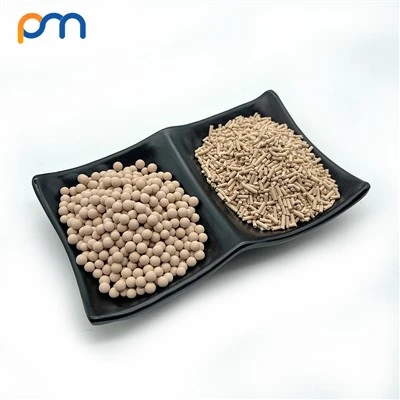
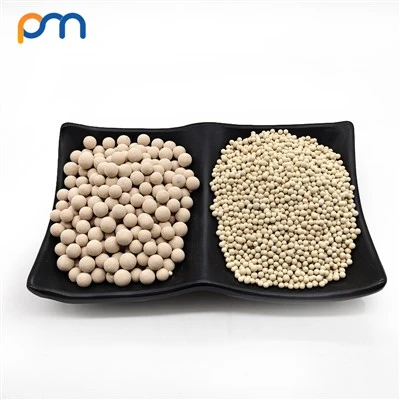
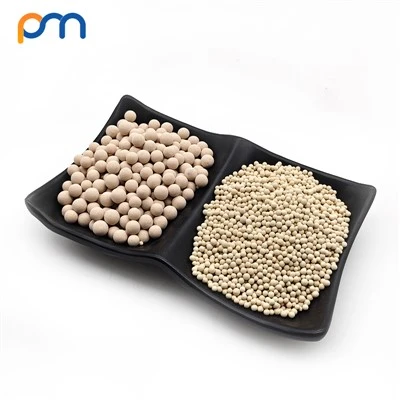
Zeolites are natural or synthetic crystalline aluminosilicates that have a repeating pore network and release water at high temperatures. These zeolites are generally polar by nature.
They are manufactured by hydrothermal synthesis of sodium aluminosilicate or other silica source in an autoclave, followed by ion exchange with certain cations (Na+, Li+, Ca2+, K+, NH4+). The channel diameter of zeolite cages usually ranges from 2 to 9 angstrom (Å) (200 to 900 picometers (pm)). The ion exchange process is followed by drying of the crystals, which can be pelletized with a binder to form macroporous pellets.
Activated Carbon
Activated carbon is the most widely used adsorbent. It is a highly porous, amorphous solid consisting of microcrystallites with a graphite lattice, usually prepared in small pellets or a powder. It is nonpolar and cheap. However, one of its main drawbacks is that it is combustible.
This isotherm shows the adsorption of nitrogen on activated carbon at different pressures. The graph shows a marked microporous type I behavior.
Activated carbon can be manufactured from carbonaceous material, including coal (bituminous, sub-bituminous, and lignite), peat, wood, or nutshells (including coconut). The manufacturing process consists of two phases, carbonization and activation. The carbonization process includes drying and then heating to separate by-products, including tars and other hydrocarbons, from the raw material, as well as to drive off any gases generated. The carbonization process is completed by heating the material at 400–600°C in an oxygen-deficient atmosphere that cannot support combustion.
Platinum And Palladium
Platinum and palladium, especially in finely divided form, are great adsorbents of hydrogen and other gases. They therefore serve as excellent catalysts of various chemical reactions. For example, platinum-supported catalysts are used in the refining of crude oil, reforming, and other processes for producing high-octane gasoline and aromatic compounds for the petrochemical industry. Also, the chemical industry uses platinum or a platinum-rhodium alloy to catalyze the partial oxidation of ammonia to yield nitric oxide—the raw material for fertilizers, explosives, and nitric acid.
What Materials Are Used to Make Adsorbents
Adsorbents can be made from many different raw materials, but they fall into several classes of materials. The raw material an adsorbent is made from determines many of its key propertie
|
ACTIVATED CARBON |
ACTIVATED CARBON |
ACTIVATED ALUMINA |
MOLECULAR SIEVES |
|
Surface Area, m2/g |
Coconut shells, |
Aluminum TriHydrate |
Zeolite Type: |
|
Raw Materials |
≥ 1,000 |
200 - 250 |
600 - 700 |
|
MicroPore Size, Å |
Range: 15 - 30 |
Range: 30 - 200 |
DISCRETE SIZES: 3Å, 4Å, 5Å, 10Å |
|
Hydrophobic / Hydrophyllic |
Hydrophobic |
Hydrophyllic |
Hydrophyllic |
|
Acid-Base |
Can be either |
Basic |
Basic |
|
Unmodified version used |
Hydrocarbons, VOC's |
Water; Hydrocarbon |
Water, H2S, |
When a fluid passes through a vessel filled with adsorbent, there is a zone in the vessel within which the contaminant is removed from the fluid & is "stored" on the adsorbent. If an adsorbent is "slow acting," then the size of this removal zone is large. If the adsorbent is "fast acting," the removal zone is smaller. We call the removal zone the mass transfer zone (MTZ) because it is the zone in the vessel that is required for the total mass (or quantity) of contaminant in the fluid to transition from the fluid-phase to the adsorbed-phase.
Smaller pores contribute to faster removal action, thus a smaller MTZ. For example: Zeolite molecular sieves vs. activated alumina for removing water from a gas. The zeolite has smaller pores than the alumina, which contributes to the faster action of the zeolite for removing water.
Characteristics of Adsorbent
Adsorbents are used usually in the form of spherical pellets, rods, moldings, or monoliths with hydrodynamic diameters between 0.5 and 10 millimeters (mm). For repetitive use at high temperatures, they need to have high abrasion resistance and high thermal stability. In addition, small pore diameters lead to higher exposed surface area and hence higher capacity for adsorption. Adsorbents must also have a distinct pore structure that enables rapid transport of vapors.
Oxygen-containing Compounds: Typically hydrophilic and polar, including materials such as silica gel and zeolites
Carbon-based Compounds: Typically hydrophobic and nonpolar, including materials such as activated carbon and graphite
Polymer-based Compounds: Consist of a porous polymer matrix containing polar or nonpolar functional groups
In addition, some metals such as platinum and palladium (in finely divided form) are good adsorbents of certain gases and serve as catalysts in chemical reactions.
The Main Driving Force for the Growth of Catalysts
Rising Environmental Concerns: The increasing awareness regarding environmental pollution and its impact on human health has compelled governments and industries worldwide to adopt stringent emission control measures. Adsorbents play a vital role in the reduction of harmful pollutants, including volatile organic compounds (VOCs), nitrogen oxides (NOx), and sulfur dioxide (SO2), thereby fueling their demand in air and water purification applications.
Expanding Water Treatment Industry: Rapid industrialization and population growth have placed immense pressure on global water resources, leading to a surge in water treatment activities. Adsorbents are extensively used in water purification processes to remove contaminants, heavy metals, and organic pollutants, driving their adoption in the water treatment industry.
Growing Pharmaceutical and Biotechnology Sector: With the pharmaceutical and biotechnology industries witnessing unprecedented growth, the need for advanced adsorbents for purification and separation of complex biomolecules has also increased. Adsorbents, such as activated carbon and silica gel, are widely used in drug purification and refining processes, further propelling the market growth.
Adoption of Adsorbents in Gas Separation: In the energy and petrochemical sectors, adsorbents find applications in gas separation processes, such as natural gas purification and hydrogen production. The increasing demand for cleaner and sustainable energy sources has augmented the use of adsorbents in these applications.
Technological Advancements: Continuous research and development efforts by key market players have led to the development of novel adsorbents with enhanced efficiency and selectivity. Innovations like hybrid adsorbents, metal-organic frameworks (MOFs), and nanostructured adsorbents are broadening the scope of adsorbent applications, driving market growth.
Principle of Adsorbent Filtration

The adsorbent is a process of intercepting the pollutants in the suspended state in the water, and the intercepted suspended matter fills the gaps between the activated carbons. The pore size and porosity of the filter layer increase with the increase of the particle size of the activated carbon material. That is, the coarser the particle size of the activated carbon, the larger the space that can accommodate the suspended solids. It is manifested as enhanced filtration capacity, increased dirt holding capacity, and increased dirt interception. At the same time, the larger the pores of the adsorbent layer, the deeper the suspended solids in the water can be transported to the next layer of adsorbent layer. Under the condition of sufficient protection thickness, the suspended solids can be retained more, making the middle and lower filter layers more efficient. The interception function is well exerted, and the amount of pollutant interception of the unit increases.
Strictly speaking, the retention capacity of activated carbon for suspended solids comes from the surface area provided by activated carbon. When the flow rate is low, the filtration capacity of the unit mainly comes from the screening effect of activated carbon, and when the flow rate is fast, the filtration capacity comes from the adsorption effect on the surface of activated carbon particles. The stronger the adhesion.
Adsorbents or Absorbents
While air flow is critical in controlling moisture, it does not fix every situation especially within sealed containers where mold and mildew can easily grow. There are a multitude of products out in the market, but understanding their role is key to using them effectively. By definition, an adsorbent better known as a desiccant is a chemical substance such as silica gel that attracts moistures and holds it like a magnet on its surface, while an absorbent soaks up moisture through its capillaries and swells with the retention of the liquid such as in a paper towel or sponge.
An absorbent is best employed to clean up after spilled water acting as a diaper to suck up the puddle of liquid, however any remaining dampness can be effectively adsorbed by a desiccant to remove the chances of mold and mildew that develops from trace amounts of moisture left behind in a tub or drum.
Our Factory
Super Packing Mall is a leading manufacturer specializing in tower packing. Our tower packing is well accepted by overseas customers. It includes metal, ceramic, plastic random packing, structured packing, ceramic ball, water treatment material, adsorbent etc.
Our Product are used for industries like chemical industry, chemical fertilizer industry, oil refining, petrochemical industry and natural gas, fine chemical, flavors factory, air pollution control, isomer separation, the separation of thermally sensitive materials etc.