



Molecular Sieve
Benefits of Molecular Sieve
20+ years molecular sieve manufacturer
High Adsorption Capacity
Zeolite molecular sieves have rich pore structures and large specific surface areas. They can quickly and effectively adsorb impurities such as gases and liquids (especially water), and have a high affinity for polar molecules and unsaturated molecules.
Good Thermal Stability
Renewability
After the molecular sieve desiccant is saturated with adsorption, it can usually be regenerated by heating, decompression and other methods to restore its adsorption and separation performance, thereby achieving multiple cycles of use and reducing the cost of use.
Long service life
The service life of molecular sieves is affected by many factors. Generally, the service life of molecular sieves in industrial applications is usually 3-5 years. Under some mild conditions, proper use and maintenance, its service life may be extended to 5-8 years.
Products Description
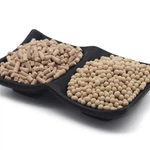
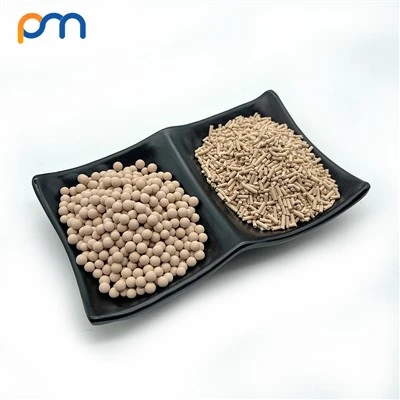
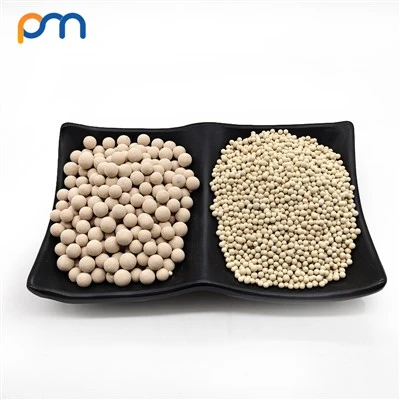
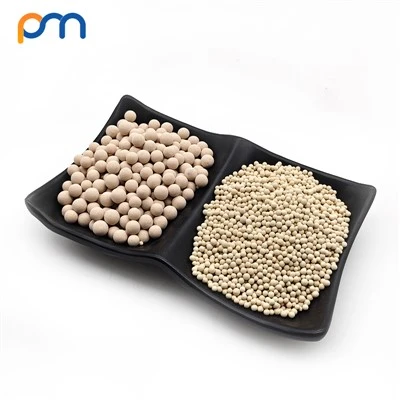
Molecular Sieve is a kind of microporous crystal of aluminosilicate, which has uniform pore size and extremely high specific surface area. These holes can adsorb molecules smaller than their diameter into the cavity, and have preferential adsorption capacity for polar molecules and unsaturated molecules. The greater the polarity and the higher the degree of unsaturation, the stronger its selective adsorption and strong water absorption. Due to the different uses of molecular sieve, it is divided into 3A/4A/5A/13X/13X APG/13X HP/Lithium molecular sieve and carbon molecular sieve.





Types and Applications of Molecular Sieves

Molecular Sieve 3A
3A molecular sieve is an alkali metal aluminum silicate with a pore size of 3 angstroms. It is mainly used to adsorb moisture and does not adsorb molecules with a diameter greater than 3 angstroms. Packing Mall 3A zeolite has the characteristics of fast adsorption speed and high compressive strength. It is widely used in the drying of petroleum cracking gas, ethylene, propylene, butadiene, methanol, ethanol, air, natural gas, methane gas, acetylene and solvent dehydration etc.

molecular Sieve 4A
The pore size of 4A molecular sieve is 4 angstroms, and It can adsorb any molecule with a critical value not greater than 4A, such as water, methanol, ethanol, ethylene, propylene, hydrogen sulfide, sulfur dioxide, carbon dioxide, ammonia, etc. 4A zeolite has very good adsorption performance and good oil adhesion and is safe and environmentally friendly. It is used for drying air, natural gas, alkanes and refrigerants; small package desiccant and static drying of pharmaceutical packaging and electronic components.

Molecular sieve 5A
5A molecular sieve, with a pore size of 5 angstroms, is a calcium type of A-type crystal structure, which can adsorb any molecule with a diameter less than 5A. In addition to the effects of 3A and 4A molecular sieves, it can also adsorb normal alkanes, ethyl chloride, ethyl bromide and butanol. 5A zeolite has high selective adsorption and is particularly suitable for pressure swing adsorption.
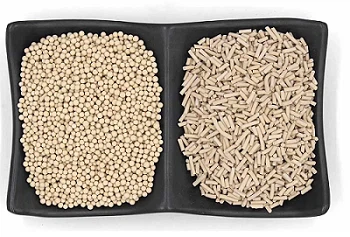
Molecular Sieve 13X
Zeolite 13X, with a pore size of 10 angstroms, is a sodium type with an X-type crystal structure, and can adsorb any molecule with a diameter less than 10 angstroms. It mainly adsorbs water, carbon dioxide and hydrogen sulfide gas. It is widely used in the drying and desulfurization of natural gas, liquefied petroleum gas, and liquid hydrocarbons; purification of raw gas in air separation units and deep drying of general industrial gases.

molecular Sieve 13X APG
13X APG molecular sieve, with a pore size of 10 angstroms, has a high carbon dioxide adsorption capacity, and can also adsorb trace amounts of moisture, acetylene, and other hydrocarbons from the air. And it is mainly used in cryogenic air separation to remove carbon dioxide and water from air to produce oxygen.

Molecular Sieve 13X HP
13X HP molecular sieve is a new type of X-type professional oxygen molecular sieve, which has the characteristics of higher nitrogen adsorption capacity, excellent nitrogen and oxygen separation coefficient, higher oxygen purity and faster adsorption speed. It is widely used in industrial, medical and household oxygen generators, and the oxygen output concentration is as high as 93%.

lithium Molecular Sieve
Lithium molecular sieve is used for air separation to produce oxygen and oxygen-enriched air. Compared with ordinary calcium and sodium oxygen-producing molecular sieves, it has better adsorption capacity and separation efficiency and is suitable for use in small vacuum pressure swing adsorption oxygen generator.

Carbon Molecular Sieve
Carbon molecular sieve has the characteristics of large nitrogen production, high nitrogen recovery rate and long service life. And the types include CMS 240, CMS 260, CMS 280, CMS 300 and CMS 330. PSA nitrogen generator is often used in industry to produce nitrogen. It is suitable for petrochemical, metal heat treatment, electronic manufacturing and food preservation industries.
How to Use Molecular Sieve?
Choose the Right Molecular Sieves
Choose the right type and pore size of molecular sieve according to the specific application requirements. For example, zeolite 3A is mainly used for water adsorption, and 13X zeolite is mainly used for desulfurization.
Activation Treatment
Normally, your newly purchased molecular sieve does not need to be activated before use after receipt. However, please note that if the molecular sieve has not been used for about 3 years, it needs to be activated before use to remove the adsorbed moisture and other impurities and restore its adsorption performance. Generally, it is calcined at high temperature (such as 350-550℃) or heated under vacuum conditions for several hours.
Filling and Installation
The activated molecular sieve is loaded evenly into the equipment. During loading, the particles are prevented from breaking and the loading is ensured to be even. The fluid passes through the bed evenly to fully realize the adsorption or separation function.
Regeneration Operation
During the adsorption process, the adsorption capacity of the molecular sieve will decrease. When it reaches a certain level, it needs to be regenerated to restore the performance for repeated use. Common regeneration methods include heating desorption, reduced pressure desorption and inert gas purging, etc.
Our Factory
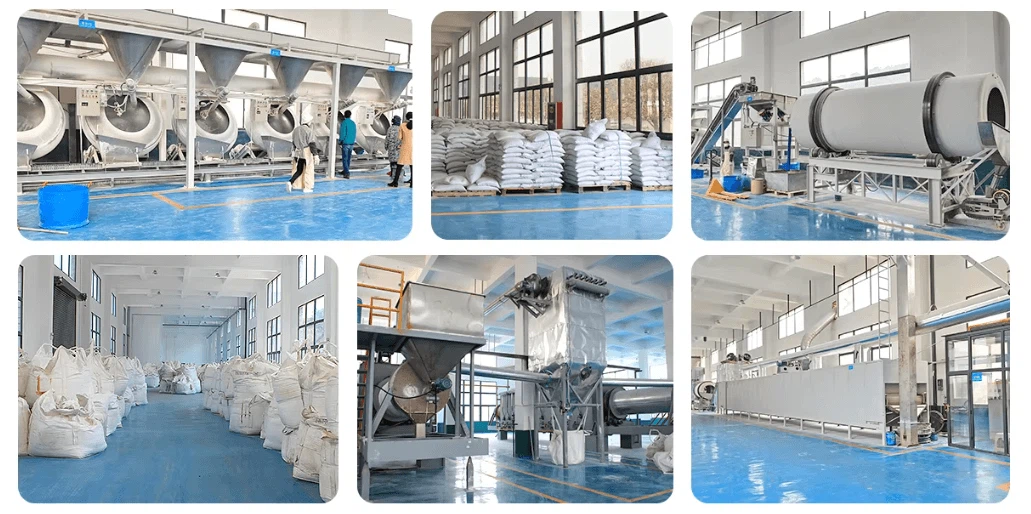
Super Packing Mall is a more than 20 years tower packing and adsorbent manufacturer. Our products include molecular sieves, activated molecular sieve powder, activated alumina, ceramic balls, metal/ceramic/plastic random tower packing and structured tower packing, silica gel and catalysts, etc.
Our products are widely used in petroleum, chemical, fertilizer, oil refining, natural gas, electronics, air separation, metallurgy, environmental protection, fine chemicals, spice factories and other industries.
FAQ
Q: What is the difference between 3A and 4A molecular sieves?
A: The pore size of 3A molecular sieve is about 3 angstroms, while that of 4A molecular sieve is about 4 angstroms. Due to the difference in pore size, 3A molecular sieve does not adsorb molecules with a diameter greater than 3 angstroms and is mainly suitable for adsorbing water; while 4A molecular sieve can adsorb water, methanol, ethanol, hydrogen sulfide, carbon dioxide and other molecules with a diameter not greater than 4 angstroms.
Q: What is the working principle of molecular sieve?
A: Molecular sieves have uniform and specific pore sizes. Molecules with diameters smaller than the pore size can enter the pores of the molecular sieve, while molecules with diameters larger than the pore size are blocked outside. This allows for the separation of molecules based on their size.
Molecular sieves have a strong adsorption effect on polar molecules and molecules with dipole moments. This is because there are electrostatic interactions and dipole - dipole interactions between the polar groups on the surface of the molecular sieve and these molecules.
Some molecular sieves can perform ion - exchange reactions. The cations in the molecular sieve structure can be exchanged with other cations in the surrounding environment. This property is often used in applications such as water softening and purification.
Q: What is the difference between silica gel and molecular sieve?
A: The pore size distribution inside gel silica desiccant is wide and uneven, and the size is relatively large, while molecular sieve is a crystalline aluminosilicate material with a highly ordered and uniform pore structure.
Silica gel has a high adsorption capacity for water and polar organic compounds. It adsorbs substances mainly through physical adsorption. Molecular sieve exhibits excellent selectivity in adsorption due to its uniform pore size. It can separate molecules based on their size and polarity. It has a strong affinity for polar molecules and can also adsorb non - polar molecules to some extent. In addition to physical adsorption, there are also some chemical adsorption effects.
Q: How to regenerate molecular sieve?
A: High Temperature Regeneration: Place the molecular sieve in a regeneration device, heat to 200 - 350℃, control the heating rate and insulation time, heat for several hours, cool to room temperature and reuse.
Pressure Swing Regeneration: First pressurize the molecular sieve bed for adsorption, then reduce the pressure for desorption. The pressure change range and cycle time need to be optimized according to the application.
Inert Gas Purge Regeneration: Inert gas passes through the molecular sieve at a certain flow rate and temperature. The flow rate and purge time depend on the bed size and adsorption degree to ensure complete gas replacement.
Vacuum Regeneration: The molecular sieve is placed in a sealed container and pumped to a certain vacuum degree with a vacuum pump. The vacuum degree and regeneration time depend on the specific situation. The higher the vacuum degree, the better the regeneration effect, but the equipment requirements and energy consumption are higher.
Q: How long is the service life of molecular sieve?
A: The service life of molecular sieves varies depending on multiple factors, and is typically around 3 - 5 years in general industrial applications, but it can be extended with proper maintenance and management.
Q: What are the main application areas of molecular sieves?
A: Molecular sieve zeolite is widely used in Petroleum, chemical, electronics, medicine, gas separation, air purification, metallurgy, fertilizer, environmental protection and other industries.
Q: What is the working principle of molecular sieve in oxygen concentrator?
A: The working principle of the molecular sieve in an oxygen concentrator is mainly based on pressure - swing adsorption (PSA). Molecular sieve is a substance with a uniform microporous structure, and its pore size is similar to the size of gas molecules. The molecular sieve commonly used in oxygen generators has a much greater adsorption capacity for nitrogen than for oxygen. This is because the kinetic diameter of nitrogen molecules is slightly smaller than that of oxygen molecules, making it easier for them to enter the microporous structure of the molecular sieve and be adsorbed, while oxygen molecules are relatively difficult to be adsorbed, thus achieving the initial separation of oxygen and nitrogen.
Q: How does carbon molecular sieve work?
A: Carbon molecular sieve uses pressure swing adsorption technology to produce nitrogen from air. When air passes through an adsorption tower filled with adsorbent, impurities such as oxygen, carbon dioxide and water vapor are adsorbed by the adsorbent, while nitrogen can pass through the adsorption tower smoothly, thus achieving the separation of nitrogen from other gases.
Q: What types of carbon molecular sieve do we have?
A: We can provide CMS 220, CMS 240, CMS 260, CMS 280, CMS 300, CMS 330. There are different diameters to choose from 0.95-1.1mm, 1.1-1.3mm, 1.3-1.5mm to 1.5-1.8mm etc.
Q: What is the difference between molecular sieve beads and activated molecular sieve powder?
A: Molecular sieve usually appear as bead and pellet with a uniform pore size and smooth surface, they are mainly used for drying and dehydration of gases and liquids.While activated molecular sieve powder is in a powdery form with extremely fine particle size and large specific surface area, they are mainly used in polyurethane products to absorb water and eliminate bubbles.