

Introduction: The Necessity of Deep Dehydration of Cracking Gas
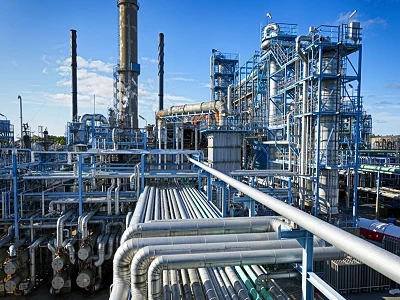
Cracking gas serves as the core feed stock in petrochemical and olefin production. Its purity directly affects the efficiency of downstream polymerization processes and the quality of final products. During the production of ethylene, propylene, and other olefins, the high-temperature cracking of hydrocarbon feed stocks generates a complex gas mixture. This mixture contains target components such as ethylene, propylene, methane, and ethane, but it also carries a certain amount of water.
This water content creates serious risks for downstream processing. Cracking gas typically contains 400–700 ppm of water. During cryogenic separation, water can freeze at low temperatures. Under high pressure and low temperature, water also reacts with light alkanes (like methane, ethane, and propane) to form white crystalline hydrocarbon hydrates. Both ice and hydrates can block pipes and equipment, sometimes forcing an emergency plant shutdown. Even worse, water molecules are polar and can irreversibly poison expensive noble-metal catalysts. This reduces catalyst activity and reaction selectivity, leading to huge economic losses. Therefore, cracking gas must undergo deep dehydration before cryogenic separation. The water content must drop to below 5 ppm (equivalent to a dew point of below -60°C) to ensure safe and stable plant operation.
Molecular Sieve – The Preferred Adsorbent for Cracking Gas Drying
1. What is a Molecular Sieve?
A molecular sieve is a crystalline metal-aluminosilicate with a well-defined porous structure and uniform micropores. Because its pore diameters are highly uniform, it can selectively adsorb molecules based on their size – it allows molecules smaller than the pore diameter to enter the internal cavities while excluding larger ones. This gives it the ability to "sieve" molecules. Common types include 3A, 4A, 5A, 13X, and 13X APG molecular sieves. They find wide use in petroleum, chemicals, natural gas, electronics, pharmaceuticals, new energy, and coal mining industries.
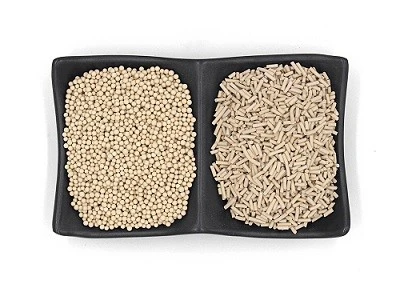
2. Why Choose PM 3A Molecular Sieve?
Among all molecular sieve types, the 3A zeolite is globally recognized as the most suitable adsorbent for deep drying of cracking gas. The 3A zeolite is a potassium-A type aluminosilicate with a pore size of about 3 angstroms (0.3 nm). Its unique "molecular sieving" effect makes it the top choice. Water molecules have a kinetic diameter of about 2.6 angstroms, so they can easily enter the 3A pores and get firmly held by the strong electrostatic field generated by the cations and oxygen atoms on the pore walls. In contrast, the main components of cracking gas – such as ethylene (C₂H₄), propylene (C₃H₆), ethane (C₂H₆), and propane (C₃H₈) – all have kinetic diameters larger than 3.6 angstroms, so they stay completely outside the pores.
Moreover, the 3A zeolite only adsorbs water and does not adsorb larger hydrocarbon molecules. The PM 3A zeolite offers fast adsorption kinetics and a very high capacity – its static water adsorption can exceed 21% by weight. It can reduce the outlet water content of cracking gas to below 5 ppm. In addition, it has excellent particle strength, resists crushing and dusting, and helps maintain a stable bed pressure drop.
Industrial Application of Molecular Sieve Drying
In a typical cracking gas drying unit, the 3A zeolite is usually applied in fixed-bed adsorbers. Before the cracking gas enters the cold box and the demethanizer, it first goes to a feed separator for gas-liquid separation. The gas from the top of this separator then enters the first dryer, which contains the 3A zeolite to remove moisture. After drying, the gas goes to the depropanizer, where heavy components are removed from the bottom. The overhead light components then pass through a compressor and enter a second-stage dryer feed drum. After further drying, the gas proceeds to the downstream separation system.
To achieve continuous operation, plants normally adopt a two-tower or multi-tower configuration – while one tower performs adsorption, another undergoes regeneration and cooling. According to industrial practice, after passing through a 3A zeolite bed, the outlet water content can be reliably reduced to less than 5 ppm.
Regeneration and Maintenance of Molecular Sieve
1. Regeneration Principle and Conditions
After the adsorbent becomes saturated with water, it requires regeneration to restore its capacity. The regeneration process usually uses a heated dry gas (commonly nitrogen) as a purge stream, which flows in reverse through the bed to heat the zeolite and drive off the adsorbed moisture. Typically, regeneration uses dry gas at 200–300°C. The degree of regeneration depends on the temperature, flow rate, and humidity of the hot gas.
2. Key Factors Affecting the Operating Cycle
The actual operating cycle of a cracking gas dryer depends on several factors. Studies show that the main limiting factors include the inlet cracking gas temperature, the regeneration conditions, and the frequency of regeneration cycles. To extend the dryer's run time, operators can perform breakthrough tests, adjust the feed gas temperature, optimise the regeneration steps, and reduce unnecessary regeneration cycles. These measures have proven effective in prolonging the on-stream period.
Conclusion
Molecular sieve drying technology – and particularly the 3A zeolite – plays an indispensable role in ensuring the long-term, safe, stable, and efficient operation of ethylene and other olefin production units. Its selective adsorption mechanism, based on molecular size differences, allows it to remove water from cracking gas with high efficiency while avoiding the loss of valuable hydrocarbons and preventing olefin polymerisation or coking inside the pores. As dual-tower/multi-tower continuous operation processes mature and regeneration operations continue to improve, this drying technology will remain a vital part of the petrochemical industry.
Frequently Ask Questions (FAQ)
Q1: Why must we use 3A zeolite for cracking gas drying rather than 4A or 5A?
The 3A zeolite has a pore size of about 3 angstroms, which perfectly admits water molecules (≈2.6 Å) while excluding all hydrocarbons larger than 3.6 Å, such as ethylene and propylene. The 4A zeolite has a 4-Å pore that can adsorb some hydrocarbons, and the 5A type has even larger pores, which not only adsorbs more hydrocarbons but also risks polymerising olefins inside the pores. Therefore, 3A provides the strongest selectivity and is the best fit for unsaturated gas streams like cracking gas.
Q2: How dry can 3A zeolite make cracking gas?
Under optimised operating conditions, 3A zeolite can lower the water content from 400–900 ppm at the inlet to less than 5 ppm at the outlet, with a stable dew point below -60°C. This level fully meets the strict requirements of cryogenic separation and effectively prevents ice and hydrate blockages.
Q3: How long does a zeolite charge last, and when should we replace it?
High-quality 3A zeolite can maintain good adsorption capacity after thousands of adsorption-regeneration cycles. The actual service life depends on factors such as inlet temperature, moisture load, impurities, and regeneration practices. Generally, a charge lasts 3–5 years. You should consider replacement when you observe persistently high outlet moisture, a significant rise in bed pressure drop, or severe particle attrition.
Q4: What are the common troubles in dryer operation, and how can we prevent them?
Common issues include: (1) zeolite attrition – this raises bed pressure drop and clogs downstream filters, often caused by frequent temperature swings, gas scouring, or mechanical vibration; (2) high outlet water content – typically due to adsorbent saturation, incomplete regeneration, or liquid water carryover from the feed; (3) excessive pressure drop – which may come from attrition, accumulated impurities, or poor loading. Preventive measures include strictly controlling the feed temperature, optimising regeneration parameters, avoiding unnecessary switchovers, and regularly monitoring pressure drop and outlet dew point.


